Drivetrain Guide / Updated August 2026
AWD or 4WD: The Only Guide That Tells You the Truth About Snow
All-wheel drive won't help you stop. Four-wheel drive won't help you corner. Winter tires do both. Here's what you actually need in 2026.
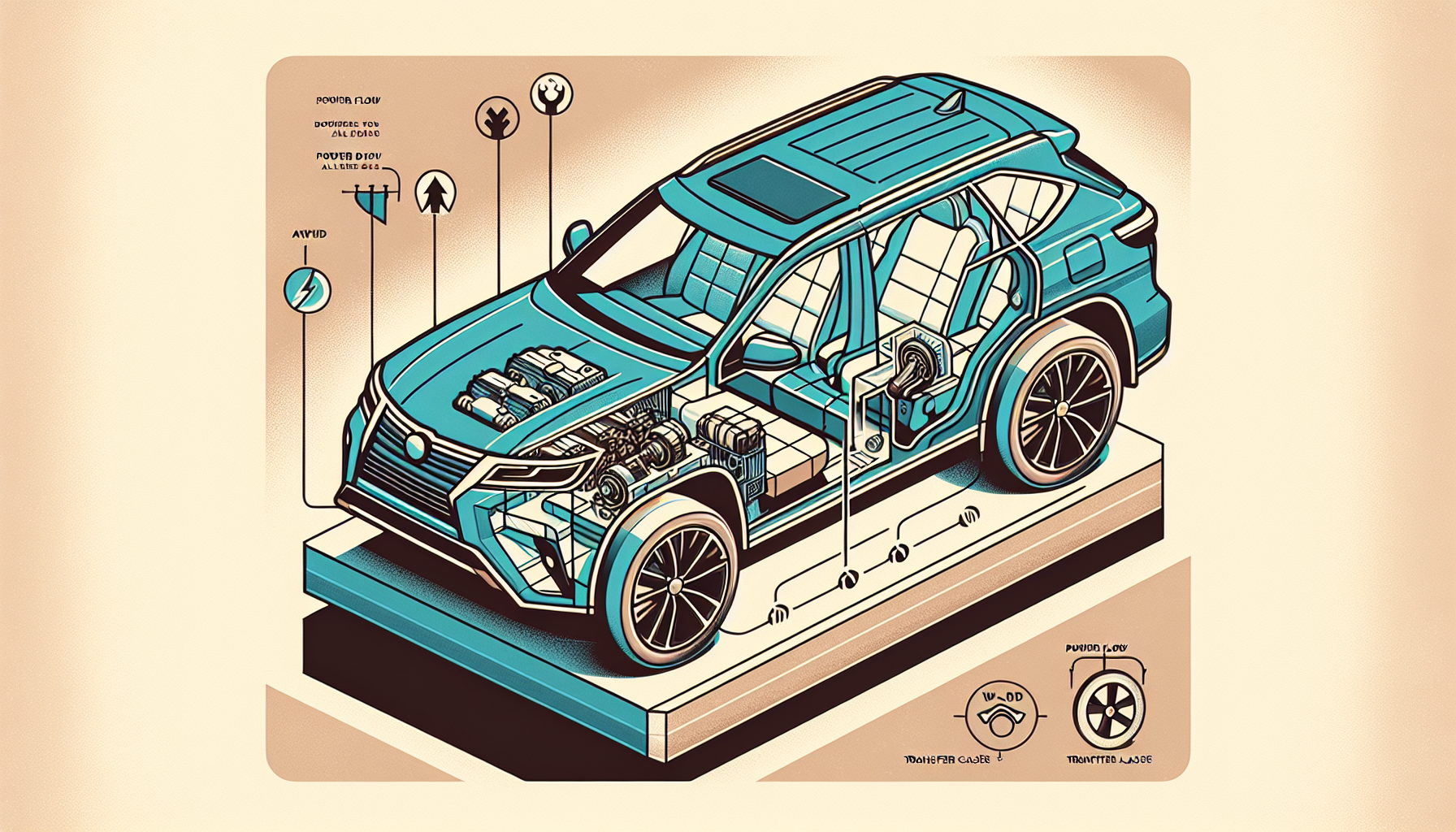
Tires Stop You, Not Drivetrain
In Tire Rack's packed-snow braking test at 30 mph, a vehicle on winter tires stopped in about 59 feet versus about 89 feet on all-season tires, roughly two car lengths shorter. AAA puts the winter-tire braking improvement at about 35 percent. AWD changes none of it: drivetrain helps you accelerate, never brake.
Sources: Tire Rack packed-snow braking test; AAA, “Do You Really Need Snow Tires?”. Full analysis at our snow and ice guide.
Safety note: AWD and 4WD help you accelerate on low-traction surfaces. Neither helps you stop or turn. Brake-force and cornering grip come from your tires, not your drivetrain. Drivers who overestimate AWD cause a disproportionate share of winter crashes. See our full analysis at the snow and ice guide.
What Do You Actually Need?
Jump to your use case for a direct recommendation.
The Short Answer
AWD sends power to all four wheels automatically and continuously. It is better for rain, light snow, and wet roads you drive at normal speeds. 4WD is a driver-selectable system with a low-range gear for rocks, mud, and heavy snow at low speeds. For 95 percent of drivers in snowy climates, AWD with winter tires beats 4WD with all-seasons every time.
The key insight most car-shopping guides skip: AWD and 4WD both improve your ability to accelerate on slippery surfaces. Neither improves your ability to stop or corner. Those are governed entirely by your tires and your brakes. A front-wheel-drive car on winter tires stops shorter and corners more predictably on snow than an AWD vehicle on all-season tires. That is not opinion. That is what controlled snow-braking tests measure: winter tires cut stopping distance by roughly a third, while drivetrain makes no difference to braking at all.
If you drive in a snowy climate, put winter tires on whatever drivetrain you have. Then consider AWD as a secondary upgrade. If you tow boats on wet ramps, haul trailers on steep grades, or go seriously off-road, 4WD is the right choice. For everything else, AWD on a crossover is adequate. See our full mechanical explanation or jump directly to the snow guide.
AWD vs 4WD: The Full Comparison
Every major difference in one table. For the technical explanation of each row, see How They Work.
| Feature | AWD All-Wheel Drive | 4WD Four-Wheel Drive |
|---|---|---|
| How it engages | Automatic, continuous | Driver-selectable (most systems) |
| Low-range gear | No | Yes (2.5:1 to 4:1 reduction) |
| Locking differentials | Rare (Subaru X-Mode, sport diffs) | Common on off-road trims (Rubicon, Raptor, TRD Pro) |
| Safe on dry pavement | Always | Part-time: only in 2WD. Full-time: always. |
| Fuel economy penalty | -1 to -3 MPG vs 2WD | -1 to -2 MPG in 2WD; worse locked in 4H |
| Purchase premium (2026) | $1,500 to $3,000 | $2,000 to $4,000 |
| Typical vehicles | Crossovers, sedans, wagons, luxury SUVs | Pickups, body-on-frame SUVs |
| Maintenance | Rear diff fluid, CV joints, clutch packs | Transfer case fluid, front and rear diff fluid, U-joints or CV joints |
| Towing | Moderate (up to 5,000 to 7,000 lb) | High (up to ~13,500 lb on a half-ton, more with HD trucks) |
| Off-road capability | Light trails, forest roads | Full off-road with proper tires and clearance |
| Snow and ice braking | No advantage over 2WD | No advantage over 2WD |
| Weight penalty | ~150 lb | ~250 to 400 lb |
| Typical insurance premium | Somewhat higher than 2WD (value and parts) | Higher than AWD (off-road trims cost the most) |
Data verified April 2026. Specifications vary by model year, trim, and configuration.
Popular Models at a Glance
2026 model year data. Full buyer guides: Best AWD Cars and Best 4WD Trucks.
Dynamic Torque Control, 28 MPG combined AWD
Symmetrical AWD, always-on, 30 MPG combined
Real Time AWD, 28 MPG combined, 1,500 lb tow
i-Activ AWD, predictive engagement, 26 MPG combined
Command-Trac or Rock-Trac, 4:1 low range Rubicon
Part-time 4WD, 2.57:1 low range, rear locker on TRD
Auto-4WD, up to 13,500 lb tow (3.5L EcoBoost), Trail Control
Active Twinster AWD disconnect, 29 MPG combined
Electronic-shift part-time 4WD, up to 11,320 lb tow (5.7L HEMI)
Complete Guide
Thirteen chapters covering every aspect of AWD and 4WD for 2026.
How They Work
Differentials, transfer cases, CV joints, and center diffs explained
Types of AWD
Symmetrical, torque-vectoring, on-demand, reactive: the five AWD systems
Types of 4WD
Part-time, full-time, auto-4WD, 4H vs 4L, and dry-pavement rules
For Snow and Ice
The AAA winter study, tire priority, and what to actually buy
For Off-Road
What AWD can handle and where you need 4WD with low range
For Towing
Boat ramps, trailer grades, and 2026 towing capacity tables
Fuel Economy
EPA delta tables and dollar cost per year by model
Maintenance
Service intervals, real costs, and common failure points by brand
Brand AWD Teardown
Subaru, Audi, BMW, Mercedes, Honda, Toyota, Ford, Land Rover compared
Truck 4WD Shootout
F-150, Silverado, Tacoma, Wrangler, Bronco, 4Runner spec tables
Best AWD Cars 2026
Buyer picks: crossovers, sedans, wagons, EVs, budget options
Best 4WD Trucks 2026
Buyer picks: trucks, body-on-frame SUVs, off-roaders, EVs
FAQ
Thirty-plus questions answered with full technical detail
Frequently Asked Questions
The questions buyers actually ask, answered directly. Full FAQ with 30+ questions at /faq.
Is AWD or 4WD better in snow?+
Neither is as important as your tires. In Tire Rack's packed-snow braking test at 30 mph, a vehicle on winter tires stopped in about 59 feet versus about 89 feet on all-season tires, roughly two car lengths shorter. AAA, citing that testing, puts the winter-tire braking improvement at about 35 percent. Drivetrain does not change braking distance at all. For a snowy commute, winter tires on any drivetrain beat all-season tires on AWD. If you combine AWD with winter tires, you get the best of both: confident starts and shorter stops.
What is the actual difference between AWD and 4WD?+
AWD is a continuously active system that automatically distributes power to all four wheels. It requires no driver input, and the front and rear driveshafts are allowed to rotate at different speeds so it is always safe on dry pavement. 4WD is a driver-selectable system with a transfer case that physically locks the front and rear axles together. Most 4WD systems have a low-range gear (2.5:1 to 4:1 reduction) for crawling at very low speeds, which AWD systems lack.
Can you drive 4WD on dry pavement?+
Part-time 4WD must only be used on slippery surfaces. On dry pavement, locking the front and rear axles together causes drivetrain binding because the front wheels travel a larger arc than the rear wheels when turning. This stresses the transfer case chain and gears and can cause serious damage over time. Full-time 4WD (Range Rover, Grand Cherokee Quadra-Trac, G-Wagen) is safe anywhere because it has a center differential that permits speed differences between axles.
Does AWD help on ice?+
AWD helps you accelerate from a stop on ice. It does nothing for stopping or cornering. On ice, even driven wheels have very little grip. The critical variable is tire compound: winter tires stay pliable below 45 degrees Fahrenheit, while all-season tires go brittle and lose up to 50 percent of their grip in cold temperatures alone, before any ice is present. AWD with all-seasons is not safer than FWD with winter tires on ice.
How much does AWD cost per year in fuel?+
The typical AWD fuel penalty is 1 to 3 MPG versus a comparable FWD or RWD vehicle. At 12,000 miles per year and $4.10 per gallon, a 2 MPG penalty costs about $117 extra per year. On top of the $1,500 to $3,000 purchase premium for AWD, you should expect to pay an extra $1,200 to $1,800 in fuel over 10 years, plus added maintenance for rear differential fluid and CV joints.
What is 4H vs 4L?+
4H (four-high) uses a 1:1 gear ratio and drives all four wheels. It is safe on slippery surfaces at speeds up to about 55 to 70 mph, depending on the manufacturer. 4L (four-low) adds a 2.5:1 to 4:1 torque-multiplying gear reduction and is only for very low speeds, typically below 25 mph. Use 4L for rock crawling, deep mud, very steep climbs, or pulling a heavy trailer on a wet ramp. Never use 4L above 25 mph.
Is AWD worth the extra money?+
It depends on where you live and what you do. In Phoenix, Miami, or Los Angeles, no. In Denver, Minneapolis, Boston, or Buffalo, yes, especially combined with winter tires. For towing on wet ramps or muddy boat launches, 4WD is worth it. For rock crawling and overlanding, you need 4WD with low range and ideally locking differentials. For 90 percent of drivers in snowy climates, AWD plus winter tires is the optimal combination.
Which SUVs have both AWD and 4WD options?+
Most crossovers offer only AWD (RAV4, CR-V, CX-5, Rogue, Tucson). Body-on-frame SUVs typically offer only 4WD (4Runner, Tahoe, Suburban, Wrangler, Bronco). The Jeep Grand Cherokee offers Quadra-Trac AWD on base trims and Quadra-Drive 4WD with low range on higher trims. The Nissan Pathfinder offers AWD on most trims and 4WD on Rock Creek editions. See our full comparison table on the Best AWD Cars 2026 page.